2026-08-20 ·
Safe Ways to Add Outdoor Outlets for St. Charles Summer Use
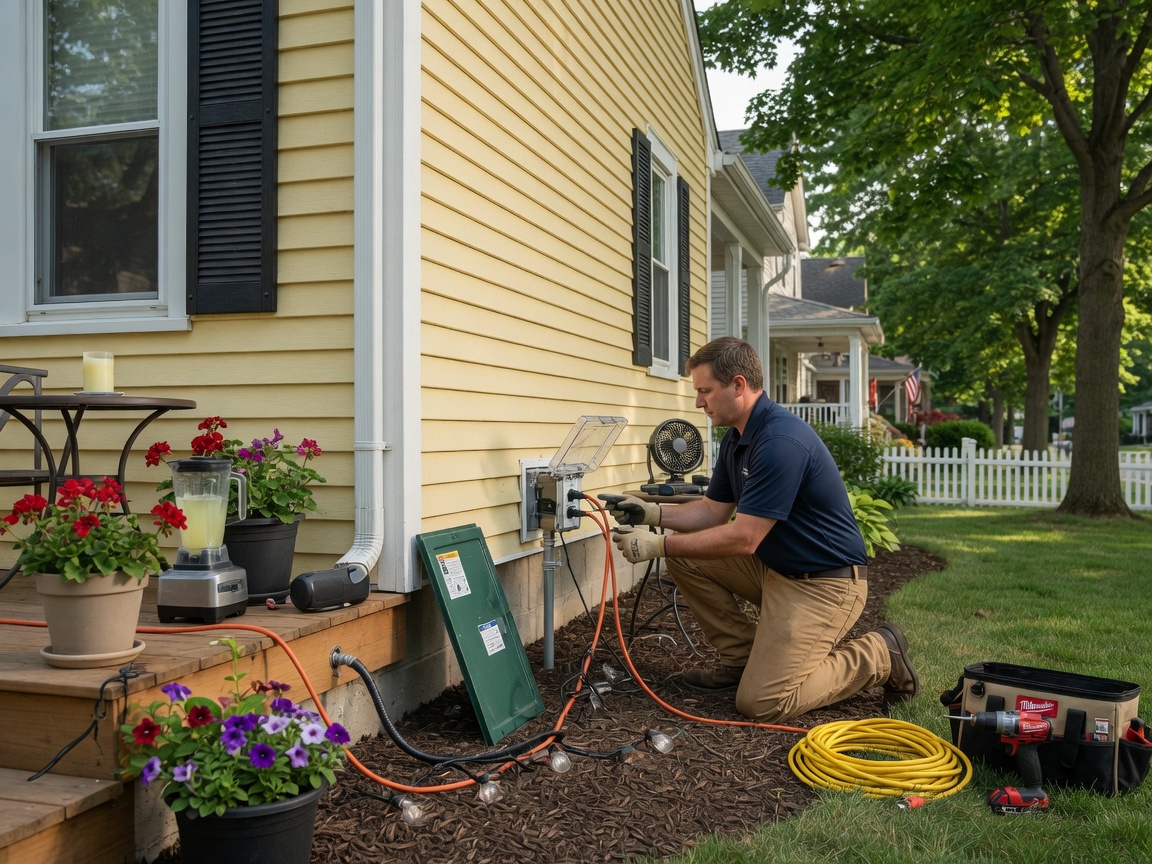
Adding safe outdoor outlets in St. Charles starts with installing GFCI-protected receptacles in weatherproof boxes with in-use covers, completed in one visit after checking local permits and existing circuits. This approach addresses the area's mix of historic homes near the Fox River and newer subdivisions where summer grilling, lighting, and pool equipment see heavy use. Proper placement avoids low spots prone to standing water after thunderstorms and accounts for the humid conditions that accelerate corrosion on standard receptacles.
Checking Existing Wiring Before Installation
Many properties in downtown St. Charles and nearby Geneva date to the early 1900s with knob-and-tube or aluminum wiring that cannot support added loads without upgrades. Before running new circuits, verify panel capacity and ground integrity, especially in homes built before 1970 along routes like Main Street. Older Fox Valley residences often show frequent breaker trips when extra outdoor loads are added, which signals the need for targeted repairs rather than simple extensions. Signs of outdated wiring in historic downtown St. Charles properties outlines visible clues such as cloth-covered cables and two-prong outlets that indicate when a full assessment is required first.
Selecting Locations and Weatherproof Components
Place outlets at least 12 inches above grade on south or east walls to reduce direct rain exposure while remaining convenient for patio use. Use 20-amp GFCI receptacles in deep weatherproof boxes with clear polycarbonate covers that allow cords to remain plugged in during rain. These covers prevent water intrusion during the intense summer storms typical along the Fox River corridor. Avoid mounting near irrigation heads or low drainage areas common in Batavia and South Elgin yards where soil saturation occurs quickly. Choose covers rated for wet locations and UV-stabilized materials to prevent cracking after several seasons of direct sun.
Running Circuits and Meeting Local Requirements
New circuits for outdoor outlets usually originate from the main panel or a subpanel, using 12-gauge UF cable buried 18 inches deep or run in conduit where exposed. St. Charles inspectors require GFCI protection at the first device and proper bonding to the grounding electrode system. In homes with aluminum wiring or overloaded panels, tie into a dedicated circuit rather than sharing with indoor loads to prevent nuisance trips. Handling frequent breaker trips in older Fox Valley residences explains how shared neutrals and undersized grounds create issues when outdoor equipment draws continuous current. Permits through the city ensure compliance with the current National Electrical Code adopted locally.
Testing and Seasonal Maintenance Practices
After installation, test the GFCI monthly by pressing the reset and test buttons to confirm it interrupts power within milliseconds. Inspect covers for cracked gaskets or debris buildup each spring before peak summer use. In St. Charles winters, remove cords and cover unused outlets to limit ice damage, then recheck seals when temperatures rise. Homeowners near the river should watch for shifting soil that can stress buried conduit over time. Electrical repairs can address any tripped GFCI or damaged cover before the next season begins.