2026-08-20 ·
Handling Frequent Breaker Trips in Older Fox Valley Residences
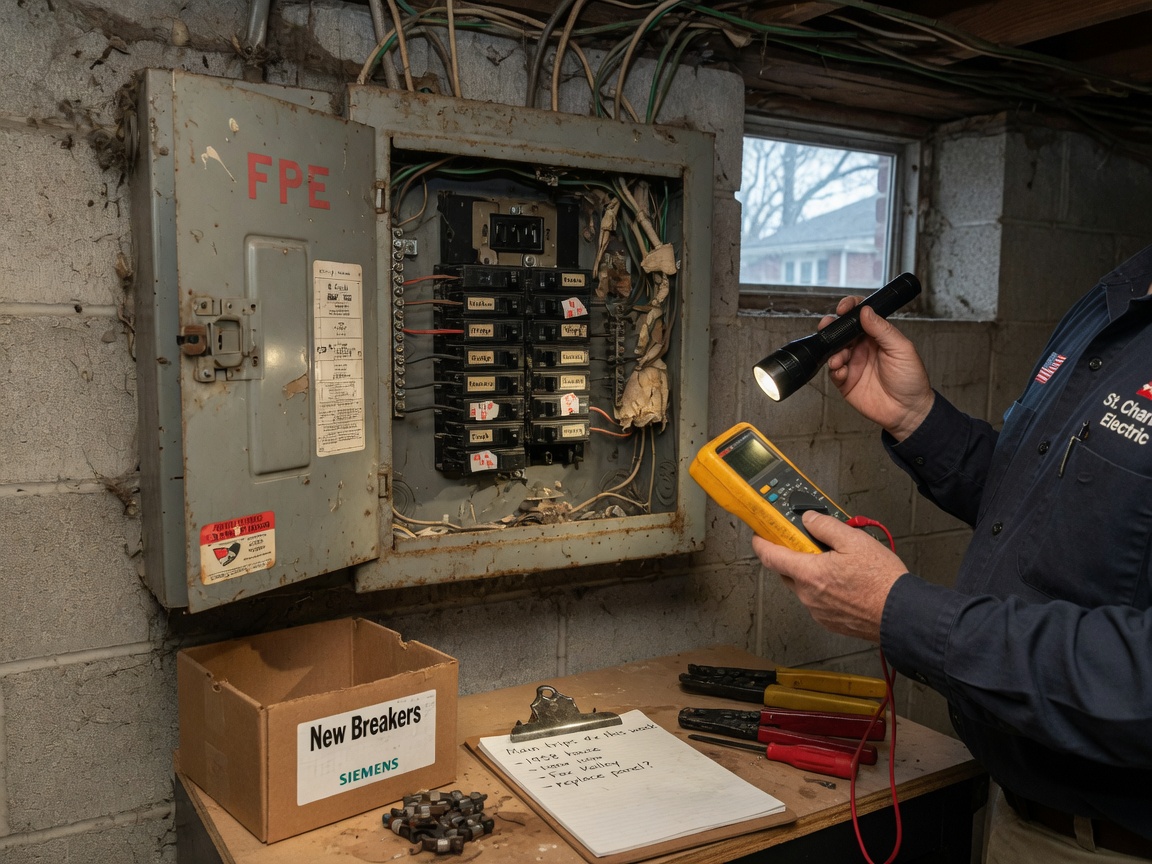
Frequent breaker trips in older Fox Valley residences usually trace to panels rated at 60 or 100 amps that cannot handle today's appliance demands. Homeowners in St. Charles neighborhoods with homes built before 1970 see this pattern when central air, electric dryers, or multiple computers run simultaneously on shared circuits.
Common Causes in Fox Valley Older Homes
St. Charles properties from the 1950s through 1970s typically contain 100-amp panels with aluminum branch wiring or undersized neutrals. These setups trip when a single circuit exceeds 15 or 20 amps because modern refrigerators, microwaves, and space heaters draw more than the original design allowed. Seasonal swings add stress: winter heating loads and summer air-conditioning cycles push marginal breakers past their limits. Soil conditions around the Fox River also contribute to occasional moisture intrusion in basements, corroding connections inside older service entrances. Residents in areas near Geneva and Batavia report the same pattern when they convert garages into living space without upgrading the feed.
Step-by-Step Circuit Tracing
Begin by mapping every outlet and fixture on each breaker using a circuit tester and notepad. Unplug all devices on a tripping circuit, then restore power and add loads one at a time while watching the breaker. Note the exact amperage draw with a clamp meter; a 15-amp breaker should never exceed 12 amps continuous. If trips occur with nothing plugged in, the wiring insulation has likely degraded. Check for warm outlets or flickering lights, which point to loose terminations inside the panel. Document findings before calling a technician so the visit focuses on the actual problem rather than broad guesswork.
Panel Capacity and Upgrade Triggers
When multiple circuits trip during normal use, the main service often lacks headroom. A 100-amp panel in a St. Charles home built in the 1960s commonly needs replacement with a 200-amp unit once electric vehicle chargers or whole-house generators enter the picture. Upgrades involve pulling new service entrance cable, installing a new meter base, and adding AFCI or GFCI breakers where code requires. This work typically takes two to three days and restores capacity without rewiring every room. Electrical panel upgrades become the practical next step once tracing shows the existing equipment cannot be safely expanded.
Rewiring Considerations for Historic Stock
Homes near downtown St. Charles with knob-and-tube or cloth-covered wiring require targeted replacement rather than full gutting. Whole-house rewiring focuses on high-load areas first: kitchens, bathrooms, and laundry rooms. New 12-gauge copper runs replace the old conductors while preserving plaster walls where possible. This approach prevents repeated trips without disturbing the character of older Fox Valley residences. Signs of outdated wiring in historic downtown St. Charles properties often appear alongside breaker issues, guiding owners on the scope of work needed.
Safe Next Steps for Homeowners
Schedule an inspection during business hours at 3540 Stern Ave unit 1a, St. Charles, IL 60174 to have the panel and wiring evaluated in person. Technicians available Monday through Friday 7am–5pm and Saturday 9am–2pm can provide a written assessment of load calculations and recommended corrections. Avoid resetting breakers repeatedly, as this masks underlying faults and risks fire. Addressing the root cause restores reliable power while meeting current safety standards for the neighborhood.